


Words Klondike : Associations
4.7221.00 Reviews
App Specs
- Version
- 1.15.2
- Updated On
- License
- Free
- Downloads
- 100,000+
- Developer
- Higgs Studio
- Categories
- Word
- Platform
- Android
Screenshots
 Analysis by AppCompare
I often reach for a word game when there’s a short gap in the day: waiting for someone, winding down after dinner, or sharing a quiet moment with another person at home. Words Klondike: Associations suits that kind of pause because its central task is about spotting relationships between words, rather than racing through a timer or filling a board with letters. I find that makes it easy to pick up for a brief session, while still giving me something to think about.
A shared game for spare moments
The game’s card-sorting idea can work well as a casual shared activity. One person can suggest a category while another looks for a different connection, and a disagreement about where a word belongs can become part of the fun. I’d treat that as an informal way to play together, not assume there are dedicated household or multiplayer tools. The appeal is that the words themselves give people something to discuss, even when they take different routes to a solution.
For example, if we have a few minutes before dinner, I can open a puzzle and invite someone nearby to reason through a tricky grouping with me. We can take turns proposing a category, or simply let one person play while the other watches. That makes the game more social without requiring a long session or a complicated setup. It is especially useful when a shared screen is more convenient than finding separate activities for everyone.
There is a trade-off, though: a single puzzle can feel less satisfying when one person wants to solve it independently and another is eager to offer clues. I’d agree on whether the other person should help before starting. That small bit of coordination protects the pleasure of working things out for yourself, which is a big part of a word-association game.
Keeping play separate on a shared device
If several people use the same phone or tablet, I would decide whose turn it is before opening the game. A shared device can make a quick puzzle convenient, but it can also blur individual progress and preferences. I wouldn’t assume that the app provides separate household profiles or a way to keep one person’s play private; the safer approach is to treat the device itself as shared and avoid relying on it to manage personal boundaries.
That matters most when someone else may pick up the device later. If I want to continue a puzzle on my own, I’d make that clear rather than expecting another player to know which screen or progress is mine. Likewise, for a relaxed group session, I’d keep the game’s role simple: one person handles the device, and everyone else contributes ideas if invited. This avoids turning a light word challenge into a dispute over who moved what.
Players also have different tolerances for hints. One person may enjoy a nudge when stuck; another may prefer to sit with the words until a connection clicks. In a shared session, I’d ask before giving away a solution. That is not a feature of the game, just a practical way to preserve the challenge for whoever is holding the device.
Worth Reading Before You Choose

EA SPORTS FC Mobile 26 Is a Bigger Football Game, but It Takes Time

Flipboard Shows What News Apps Must Do Beyond the Feed

Switching to Android Auto Means Rethinking Your Driving Routine

Google Calendar Makes a Crowded Week Easier to Manage

Ludo King Makes the Most of the Minutes Between Plans

Baby Panda World Brings Quick Play to Modern Phones, but Its Game Library Feels Busy
What kind of word-game player will enjoy it?
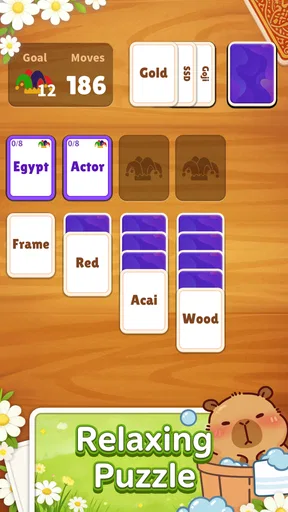
Words Klondike is a word game from Higgs Studio, and its sorting premise makes it a natural fit for people who like categorizing, making associations, and explaining why a group belongs together. Its average rating is 4.7 from around 3.7K ratings, with over 100K installs. Those figures suggest it has found an audience, but I’d still judge it by the kind of puzzle I want: this is about interpreting relationships, not spelling words from a jumble or solving a conventional crossword clue.
That difference is worth considering before downloading. A crossword gives you clues and a familiar grid to fill; a word search asks you to locate exact letter sequences; many word-building games reward forming as many valid words as possible. Here, the interesting decision is whether several cards share a meaningful category. If I’m in the mood to think about how words connect, that can feel more conversational and flexible. If I want strict clues, spelling practice, or a race for a high score, one of those alternatives may suit me better.
It also helps to change the way I approach a difficult board. Rather than grabbing the first apparent match, I scan for words that could plausibly fit more than one group and hold them back while I test clearer connections. That reduces the chance of committing too early to a category that only seems obvious at first. When a grouping feels vague, I try to describe its shared idea in a short phrase; if I can’t explain the link, I may be forcing it.
That approach is a useful trade-off rather than a guaranteed shortcut. Association puzzles can invite more than one interpretation, and a player may feel that a connection is reasonable even when it is not the intended one. I find that the challenge is enjoyable when I’m willing to reconsider my assumptions. It can be frustrating if I expect every relationship to be as precise as a dictionary definition.
Age, cost, and realistic expectations
The game is rated Everyone, so its listed age context is broad. That can make it easier to consider for a mixed-age household, although an age rating alone does not tell me whether every child will enjoy the vocabulary or the level of challenge. I’d let a younger player try a puzzle with an adult nearby and see whether the associations make sense to them. The shared discussion can help, but I would not treat the rating as a promise that the game will suit every age or reading level equally.
It is free to download, with in-app purchases listed from $1.99 to $99.99 per item. I’d keep that distinction in mind if a child uses a shared device: free access does not mean every optional purchase is free. Before handing over a device, I’d make sure the person using it knows whether purchases are allowed and use the device’s usual purchase safeguards where appropriate. I would not assume that the game itself offers household spending controls.
The release date is Nov 26, 2025, and the current version is 1.13.0. It requires Android 6.0 or later. Those details are handy for deciding whether an Android device can run it, while the free-to-start model may appeal to someone who wants to try the basic experience before deciding whether any paid items matter to them. I’d approach purchases cautiously and only consider one if I already knew it added something I personally wanted.
For a household, the practical question is less whether everyone can play in the same way and more whether the puzzle suits the moment. A person who likes quiet solo thinking can use it as a short break; a pair can talk through a category together; someone looking for a shared game with clear turn-taking or family account tools should check those needs separately rather than count on this word puzzle to provide them.
Getting to Know Words Klondike
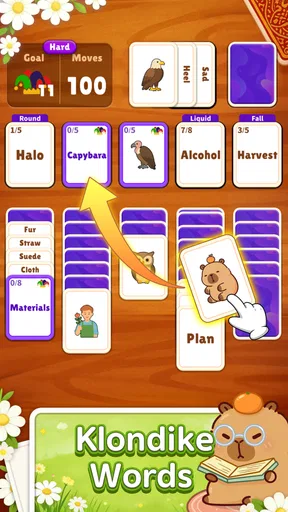
First off, let’s talk about how Words Klondike: Associations plays out. Imagine the classic word association games you might have played as a kid, and now picture it in a sleek, modern app format. The app challenges you to form connections between words, a task that’s not only fun but also surprisingly brain-boosting.
Gameplay and Features
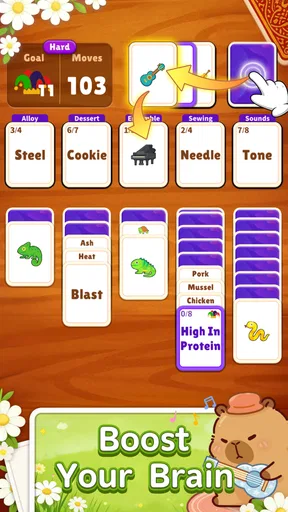
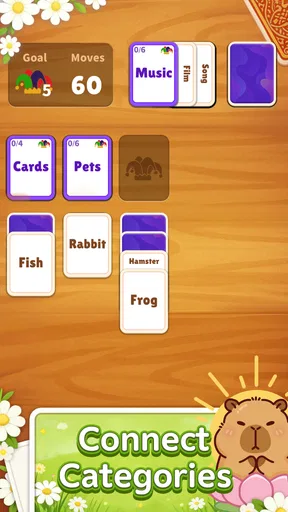
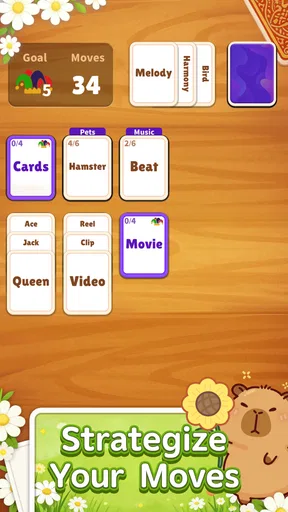
Diving into the gameplay, you’re presented with a grid of words. The objective is simple: find and connect words that are related in meaning. It sounds straightforward, right? Well, it’s a bit trickier than it seems, especially as the levels progress and the word grids become more complex.
One of the things I love about the game is its user-friendly interface. You don’t need to be a tech wizard to navigate through it. The design is intuitive, the words are clear, and the touch response is spot-on. Plus, the calming color scheme doesn’t hurt either!
Why It’s Worth Your Time
But what really sets this app apart is the mental workout it provides. It’s like doing a crossword puzzle, but with a twist. You’re not just searching for words—you’re actively thinking about how they relate to each other, which is fantastic for keeping your mind sharp.
Another standout feature is the variety of themes. Whether you’re into nature, history, or pop culture, there’s something here to pique your interest. This keeps things fresh and ensures you won’t tire of the game anytime soon.
Challenges and Rewards
As you progress, the game ramps up the difficulty with larger grids and more ambiguous word associations. It’s a challenge, for sure, but it’s also incredibly rewarding when you finally crack a tough level. Plus, the game includes daily challenges and rewards to keep you coming back for more.
And let’s not forget the social aspect. You can connect with friends and see how your skills measure up. There’s a leaderboard feature that adds a nice competitive edge to the experience.
Final Thoughts
Whether you’re a word game aficionado or just someone looking for a new way to pass the time, Words Klondike: Associations is definitely worth checking out. It’s a fun, engaging, and mentally stimulating game that will have you hooked from the first level. So, if you’re ready to test your word association skills, go ahead and give it a download. Trust me, you won’t be disappointed!
Ready to dive into a world of words? Check out the download links for Android and iOS, and start connecting those words today!
Pros
- Engaging word puzzles boost vocabulary.
- User-friendly interface for easy navigation.
- Daily challenges keep players returning.
- Offline mode available for uninterrupted play.
- Visually appealing graphics enhance experience.
Cons
- In-app ads can disrupt gameplay flow.
- Some puzzles may be too challenging.
- Limited hints without purchase options.
- Occasional bugs in older devices.
- Requires internet for updates and features.
FAQs for Words Klondike : Associations
What is Words Klondike: Associations?
Words Klondike: Associations is a word puzzle game that challenges players to find associations between different words. It’s designed to test your vocabulary and cognitive skills by presenting various word pairs and requiring you to think creatively to find connections. It’s available for both Android and iOS devices.
How does the gameplay work in Words Klondike: Associations?
In Words Klondike: Associations, you are presented with a set of words and tasked with finding associations between them. The game tests your ability to think laterally and connect words based on themes, synonyms, or contextual meanings. As you progress, levels become more challenging, requiring deeper thought and more complex connections.
Is Words Klondike: Associations suitable for all ages?
Yes, Words Klondike: Associations is designed to be accessible and enjoyable for a wide range of ages. While it offers challenging puzzles that can engage adults, the game’s intuitive interface and clear instructions make it suitable for younger players as well, providing a fun educational experience for kids.
Are there in-app purchases in Words Klondike: Associations?
Words Klondike: Associations is free to download, but it does offer in-app purchases. These purchases can enhance the gaming experience by providing hints or unlocking additional levels. However, they are entirely optional, and the game can be fully enjoyed without spending any money.
What kind of support is available if I encounter issues with the app?
If you encounter any issues while using Words Klondike: Associations, the app provides customer support options. You can reach out through the app’s support section or visit the developer’s website for troubleshooting tips and contact information. They are responsive and aim to resolve any issues promptly.


